Emissions from Biogas Generators: The Hidden Challenge in Renewable Power
For operators of anaerobic digestion and biogas facilities, on-site electrical generation remains one of the most effective ways to maximise plant value. Whether electricity is exported to the grid or used to support the plant’s own electrical and thermal demands, combined heat and power (CHP) generation continues to play a critical role in project economics.
For decades, gas engines have been the dominant technology for this application. Their relatively high electrical efficiency, established supply chain, and broad availability make them the default choice for many developers and operators.
However, there is an increasingly important issue that both technical and financial stakeholders must confront: exhaust emissions.
The Efficiency Trade-Off
The same combustion characteristics that make reciprocating gas engines efficient also create a major environmental challenge — nitrogen oxides (NOx) emissions.
Biogas is often viewed as a carbon-neutral fuel because it is derived from organic waste streams. That is true from a lifecycle carbon perspective. But carbon neutrality alone does not guarantee low environmental impact.
NOx emissions contribute significantly to atmospheric pollution and global warming. In fact, nitrous oxide (N₂O), one of the compounds associated with NOx emissions, has a global warming potential approximately 298 times greater than CO₂ over a 100-year period.
To put that into perspective, one tonne of NOx emissions can create climate impact equivalent to roughly 298 tonnes of CO₂ — comparable to driving a petrol vehicle approximately two million kilometres.
For an industry positioned as part of the clean energy transition, this matters.
Regulations Have Tightened — But at a Cost
Historically, biogas engines commonly emitted more than 2,000 mg/m³ of NOx. Regulatory pressure has driven substantial improvement, with many modern installations now required to achieve emissions closer to 250 mg/m³.
This reduction is a positive step, but it has not come without operational and financial compromises.
To meet modern emissions standards, engine systems increasingly rely on:
- Selective Catalytic Reduction (SCR) systems
- Continuous urea consumption
- Lean-burn operating strategies
- Additional emissions monitoring equipment
These systems add complexity and operating cost without increasing energy production or revenue.
For financial buyers, this is significant because emissions compliance equipment typically represents:
- Additional capital expenditure
- Increased maintenance requirements
- Higher consumable costs
- Greater operational risk
In other words, the industry has spent years adapting engines to meet minimum acceptable standards — not necessarily to optimise environmental performance or lifecycle economics.
The Regulatory Direction Is Clear
Environmental regulations rarely become less stringent over time.
Across Europe and many international markets, policymakers continue to focus on air quality, greenhouse gas reduction, and industrial emissions control. Facilities that only just comply with today’s limits may face additional retrofit costs tomorrow.
This creates a strategic challenge for asset owners and investors:
- How future-proof is the chosen generation technology?
- What happens if NOx limits tighten further?
- What is the long-term cost of compliance?
- Will the plant require additional retrofit investment in five years?
These are no longer purely environmental questions — they are financial and operational risk considerations.
An Alternative Already Exists
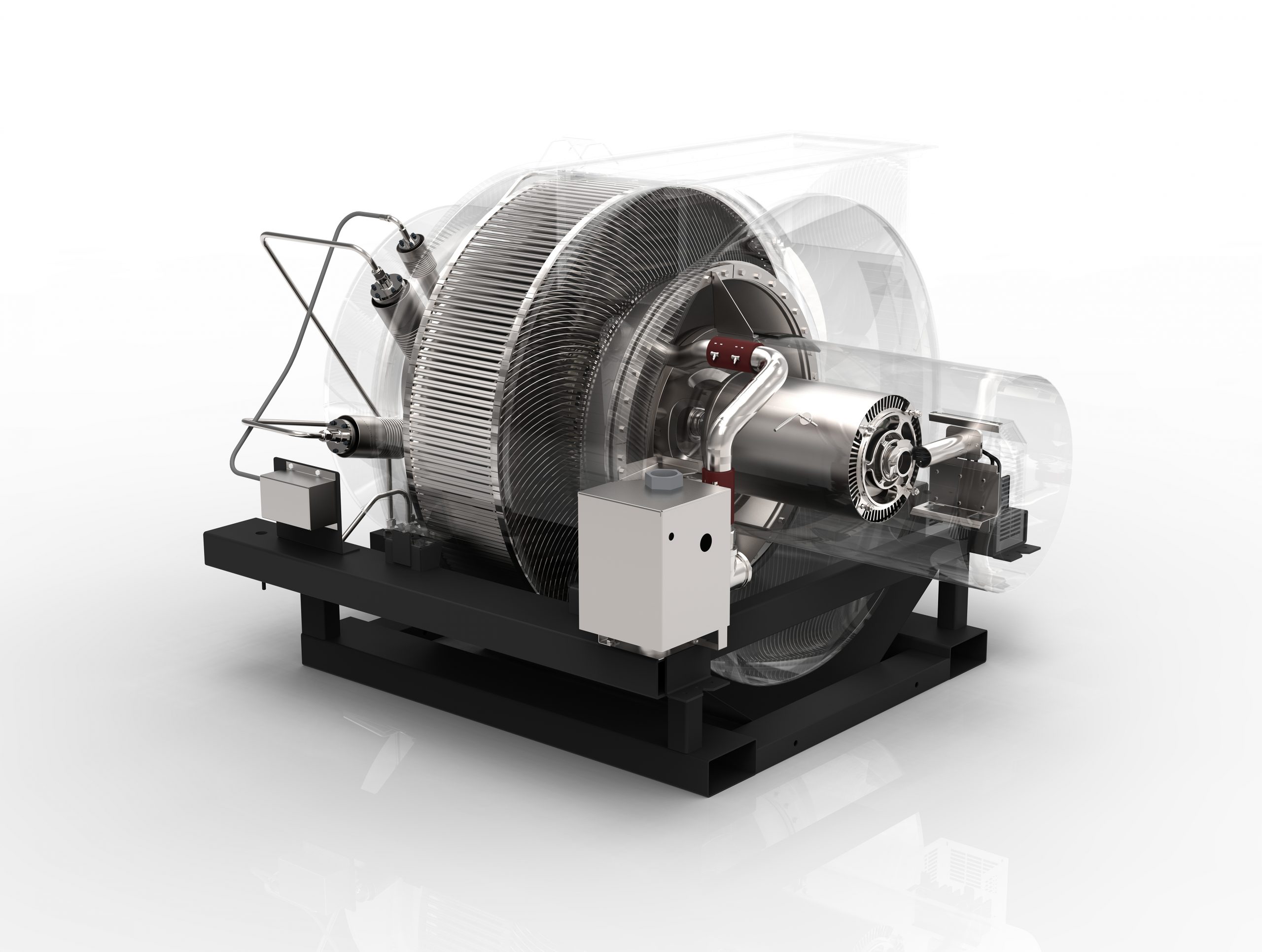
Micro gas turbines have operated successfully on biogas for many years, yet they remain underutilised compared with conventional gas engines.
The key difference is combustion technology.
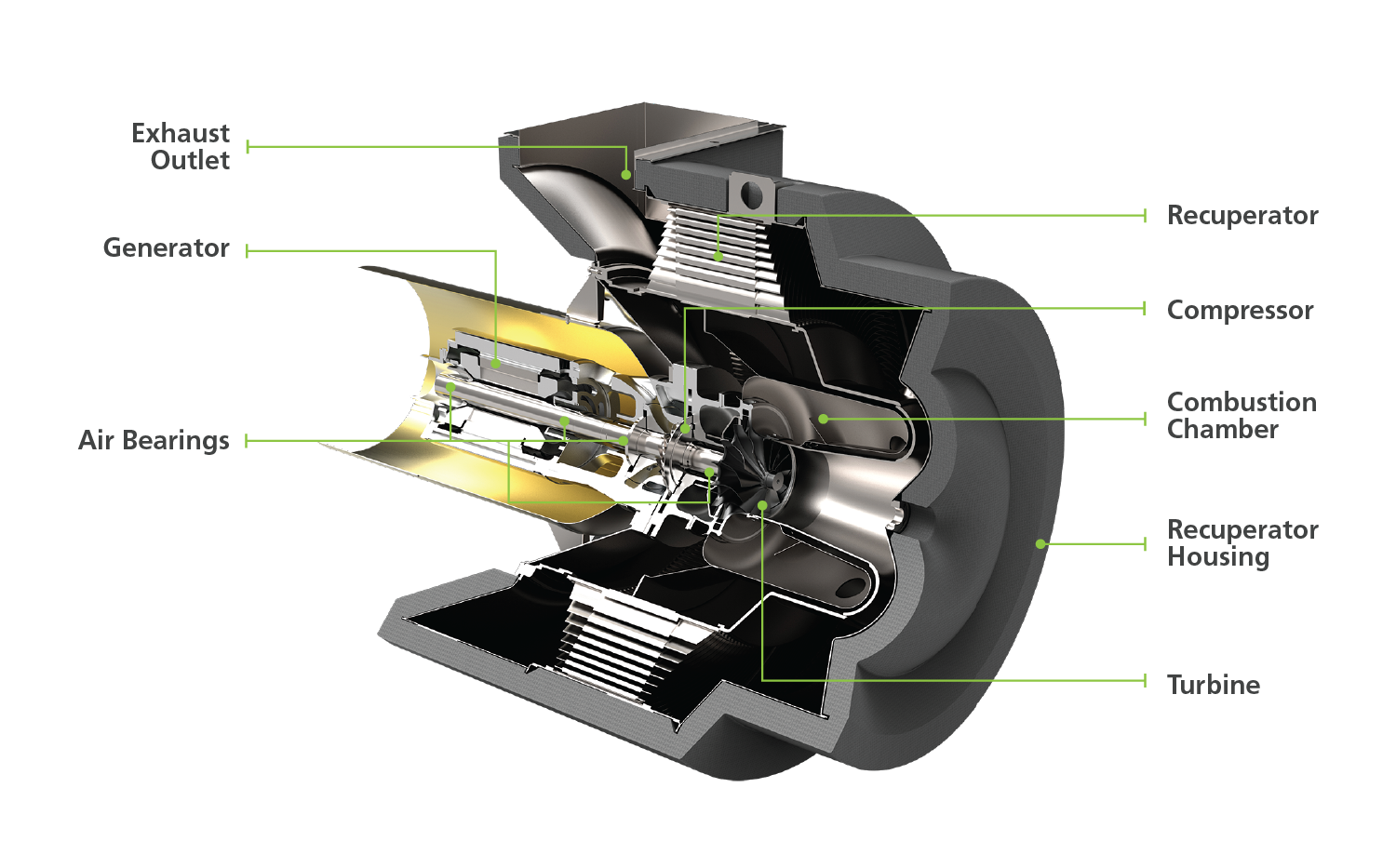
Unlike reciprocating engines, microturbines achieve ultra-low emissions through their combustion processes rather than relying on exhaust after-treatment systems.
For example, a modern Capstone Green Energy microturbine can achieve NOx emissions below 18 mg/m³.
NO_x < 18\ \mathrm{mg/m^3}
That is less than 10% of the NOx emissions level permitted for many current gas engine installations.
Looking Beyond Electrical Efficiency Alone
Historically, purchasing decisions in biogas CHP projects have focused heavily on electrical efficiency percentages.
While efficiency remains important, the market is shifting toward a broader evaluation framework that includes:
- Total life cycle cost
- Emissions exposure
- Maintenance burden
- Operational resilience
- Regulatory compliance risk
- ESG performance
When viewed through this wider lens, lower-emission technologies deserve closer examination.
A generation system with marginally lower electrical efficiency may ultimately deliver stronger long-term value if it significantly reduces environmental liabilities, maintenance complexity, and future retrofit requirements.
A Strategic Decision for the Next Generation of Biogas Projects
Biogas remains one of the most valuable renewable energy resources available because it converts waste into usable energy while supporting grid stability and circular economy objectives.
But as environmental scrutiny increases, the method of generation matters just as much as the fuel itself.
For developers, investors, and plant operators evaluating future CHP installations, micro gas turbines represent more than an alternative technology. They offer a pathway toward lower emissions, simplified compliance, and greater long-term resilience.
The industry has already proven that biogas works.
The next challenge is ensuring the technology used to generate power from it aligns with the environmental goals the sector was built to support.