
Is Increased Downtime Worth the High Electrical Efficiency?
For operators of biogas generation sites, electricity output is typically the primary income stream. Every hour an engine is offline, whether planned or not, is revenue that cannot be recovered. Yet the industry has largely accepted the maintenance burden of reciprocating gas engines as an unavoidable cost of doing business. It may be time to question that assumption.
The true cost of planned downtime
Most gas engines require a basic service every 800 to 1,500 hours, a frequency that varies with gas quality and manufacturer. In practical terms, this guarantees at least one full day of non-generation every one to two months. Over a calendar year, that accumulates to a meaningful loss of generating hours.
Beyond routine servicing, operators should budget for at least one significant intervention annually: turbocharger changes, cylinder head overhauls, alternator swaps, or full engine rebuilds. Each of these events typically removes the unit from service for a week or more.
“Planned maintenance alone can account for 6–10 days of lost generation per year — and that’s before a single unplanned failure is considered.”
Unplanned failures compound the picture
Experienced gas engine operators know that unplanned outages are not exceptional events — they are a routine part of the operating cycle. Waiting for engineers and parts can extend a single failure into days or even weeks of lost revenue, with knock-on effects for the site’s performance obligations.
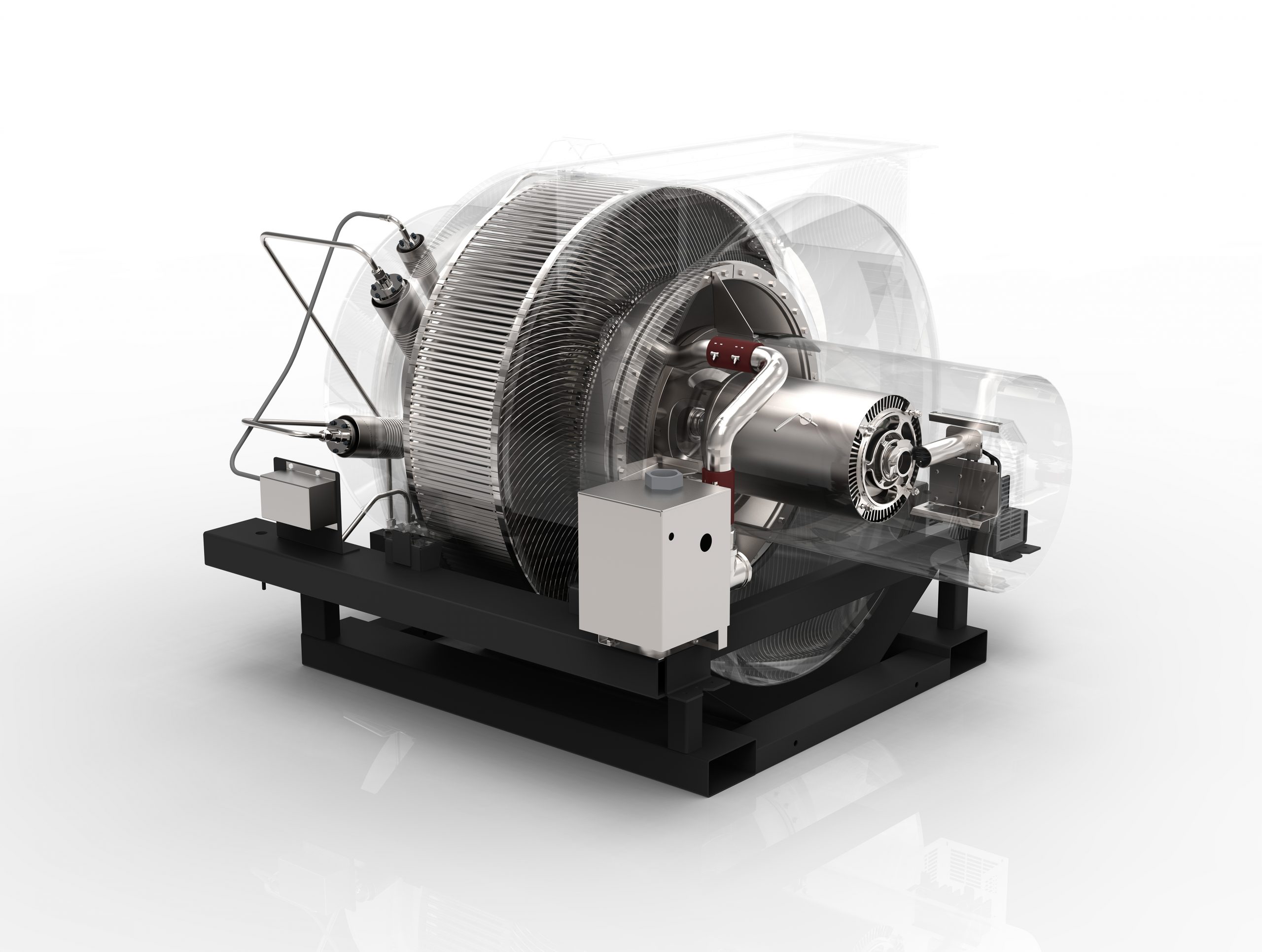
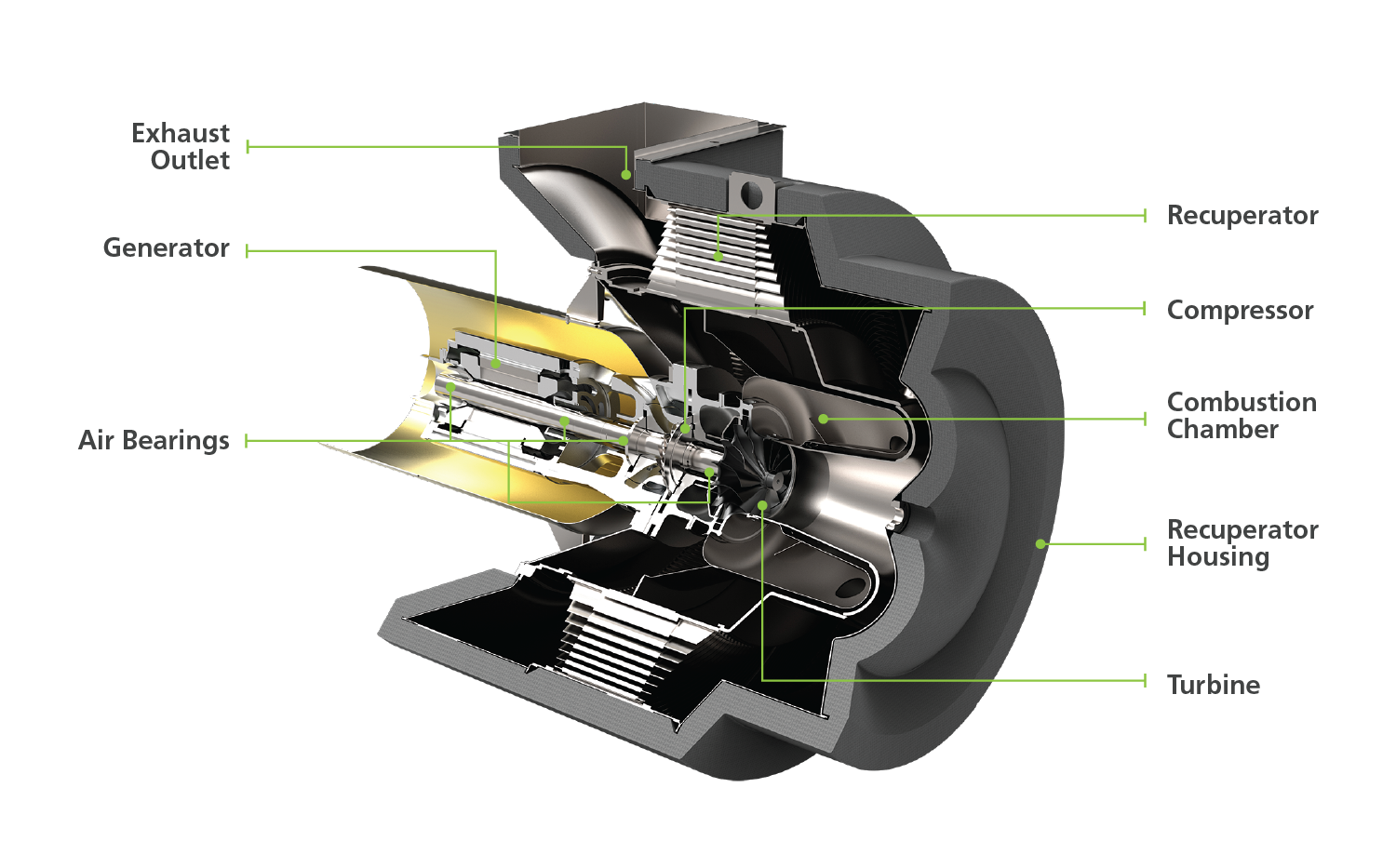
Research and operational data consistently show that gas microturbines have a mean time between failures approaching twice that of equivalent gas engines. The reason is structural: turbines have significantly fewer moving parts than reciprocating engines, removing many of the mechanical failure modes that afflict pistons, valves, and associated components.
A technology the UK has largely overlooked
Gas microturbines are not new. They have been deployed successfully across European and North American biogas markets for many years. In the UK, however, the sector has been slow to look beyond electrical efficiency as the dominant metric for comparing generation technologies. This single-metric approach may be obscuring a more complete picture of whole-life cost and performance.
| Gas engine Service interval 800–1,500 hrs Planned downtime~1 day / 1–2 months Overhauls Annually Moving parts High complexity Specialist visits Frequent | Gas microturbineRecommended Service interval 1× per year Planned downtime +4 days/yr availability Overhauls Every 5–6 years Moving parts Minimal Specialist visits Significantly fewer |
Gas microturbines require a single service per year, with significant overhauls only every five to six years. The immediate arithmetic is straightforward: compared to a gas engine on a 1,000-hour service cycle, switching to a microturbine recovers a minimum of four additional generating days per year from planned maintenance alone — before any improvement in unplanned reliability is counted.
Expanding the evaluation framework
Electrical efficiency remains a legitimate and important metric. But it is not the only one. When operators account for planned downtime, unplanned failure rates, specialist labour costs, parts availability, and operator workload, the economic case for microturbines in biogas applications becomes considerably more compelling than a raw efficiency comparison suggests.
For sites where generation income is the primary revenue driver, maximising availability — the proportion of time the unit is generating, may deliver greater financial returns than squeezing additional percentage points of conversion efficiency from a technology that spends more time offline.
“An efficient engine that isn’t running isn’t generating revenue. Availability and efficiency must be evaluated together.”
The UK biogas sector has a well-established preference for the familiar. Gas engines have a long track record on British biogas sites, and operators understandably have confidence in technologies they know. But as sites mature and operating costs receive greater scrutiny, the case for reassessing that choice and looking seriously at what gas microturbines can offer in terms of whole-life performance is stronger than it has ever been.